Turkey

Istanbul

Istanbul, Turkey

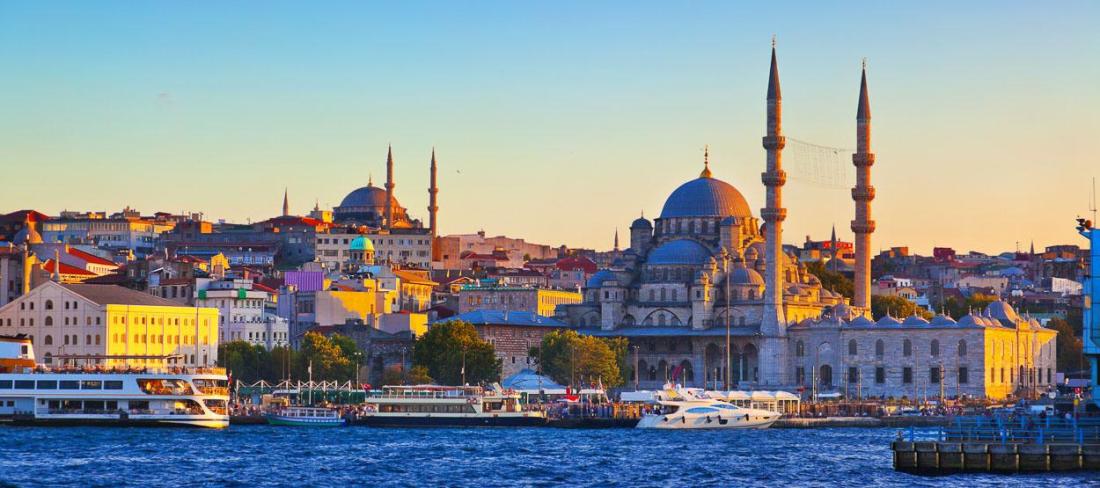
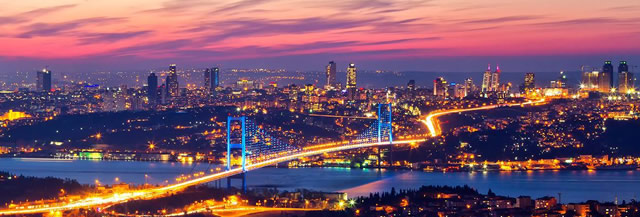
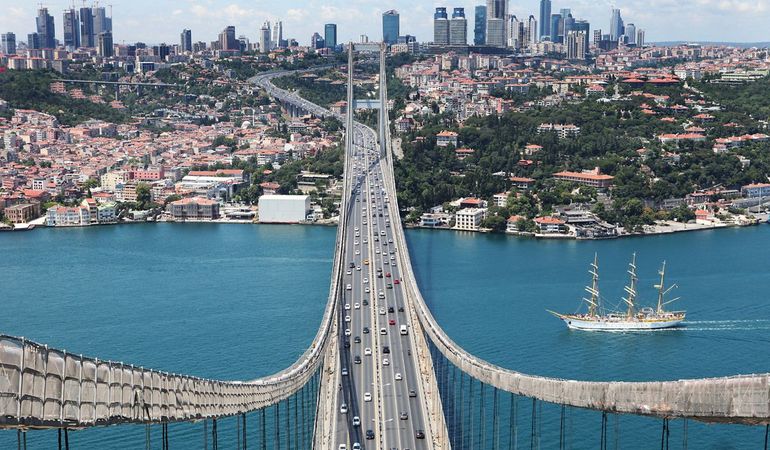
Istanbul is a major city in Turkey that straddles Europe and Asia across the Bosphorus Strait.
Its Old City reflects cultural influences of the many empires that once ruled here.
In the Sultanahmet district, the open-air, Roman-era Hippodrome was for centuries the site of chariot races, and Egyptian obelisks also remain.
iStock-521623763
The iconic Byzantine Hagia Sophia features a soaring 6th-century dome and rare Christian mosaics.
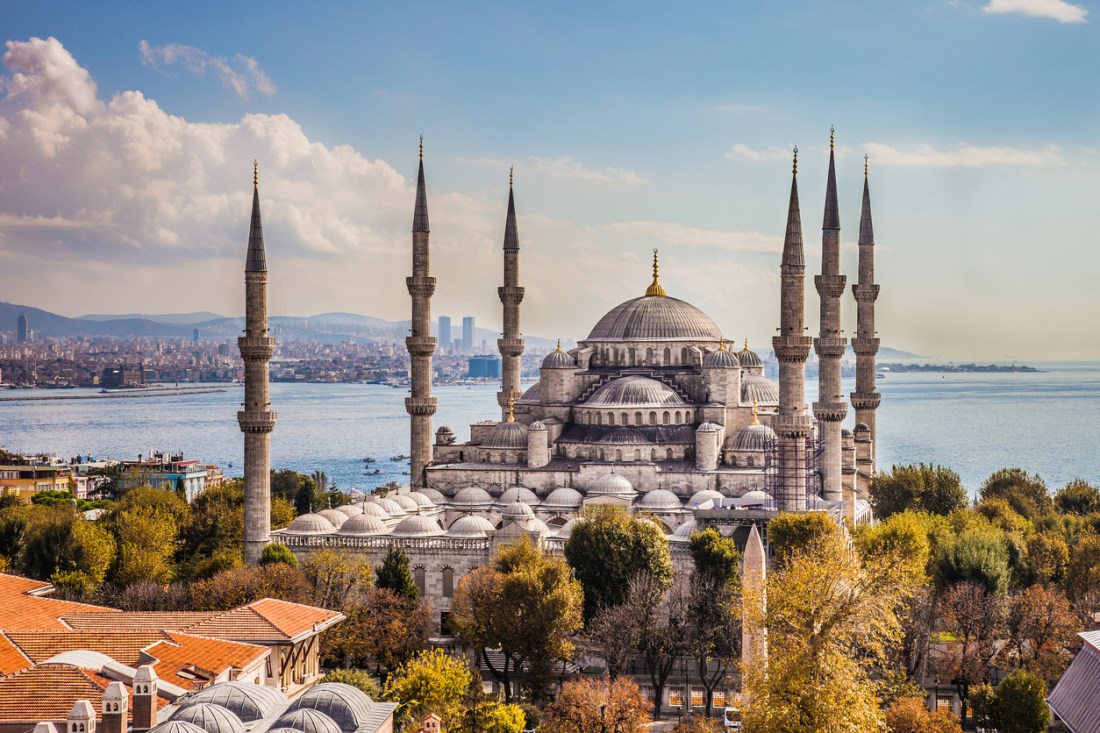
The Ottoman-era Sultan Ahmet Mosque (Blue Mosque) was named for its blue interior tiles.
Circa-1460 Topkapı Palace, home to Ottoman sultans until the 19th century, contains royal artifacts and rooms that once comprised a large harem.
visit-istanbul-640x217
Nearby is the Spice Market and rambling Grand Bazaar.
Spanning the Golden Horn estuary, atmospheric Galata Bridge is a popular fishing spot and leads to the city’s modern heart.
The Galata area is known for its medieval tower and upmarket boutiques. Beyoğlu’s stylish bars lie south of Taksim Square.
The city’s eastern, Asian side encompasses residential areas and waterfront districts such as Kadiköy.
medium_shutterstock_617441120.jpg

Antalya, Turkey

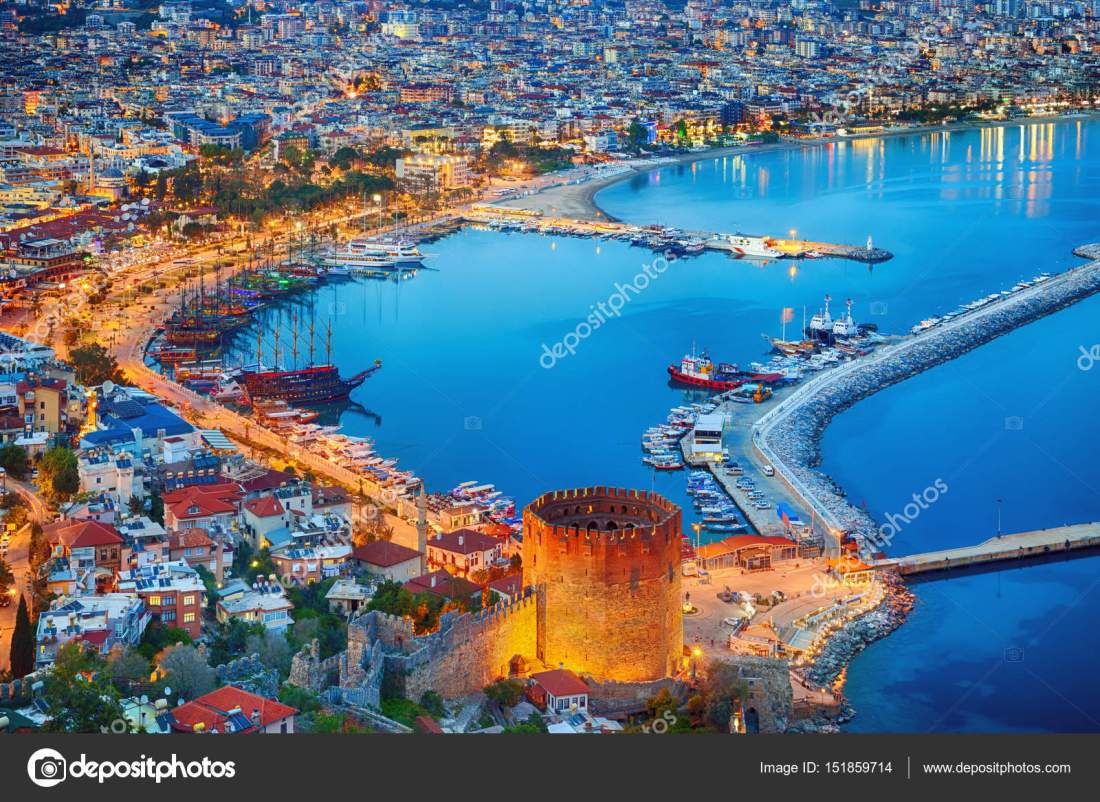
Aerial sunset view of Antalya, Turkey

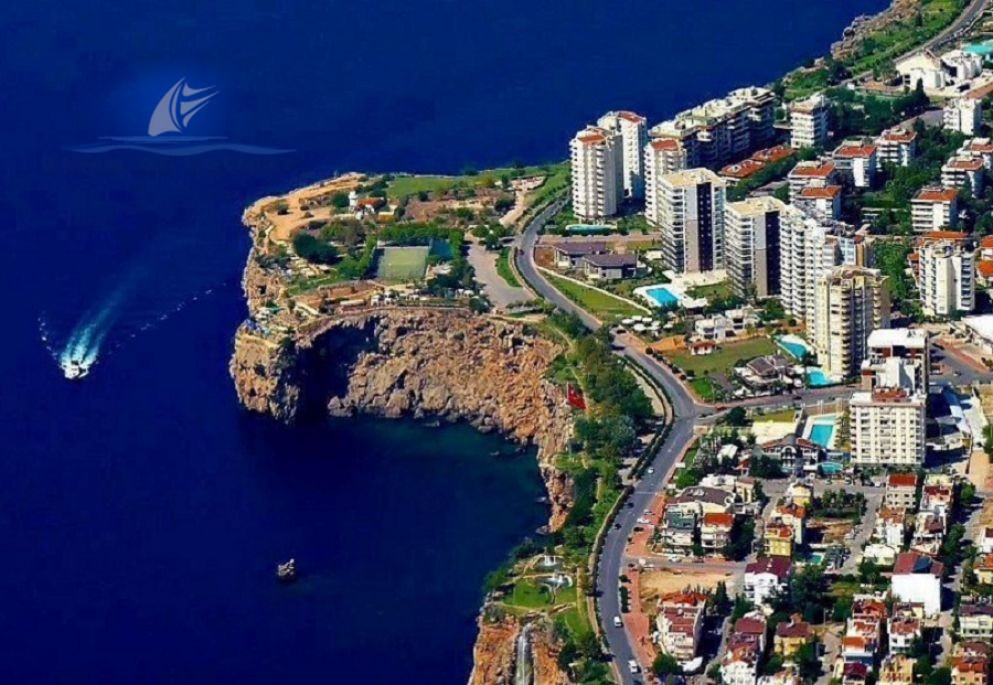
Antalya is a Turkish resort city with a yacht-filled Old Harbor and beaches flanked by large hotels.
It’s a gateway to Turkey’s southern Mediterranean region, known as the Turquoise Coast for its blue waters.
33348d9d-6fe3-43d1-a5d4-8de89a133c1c.png
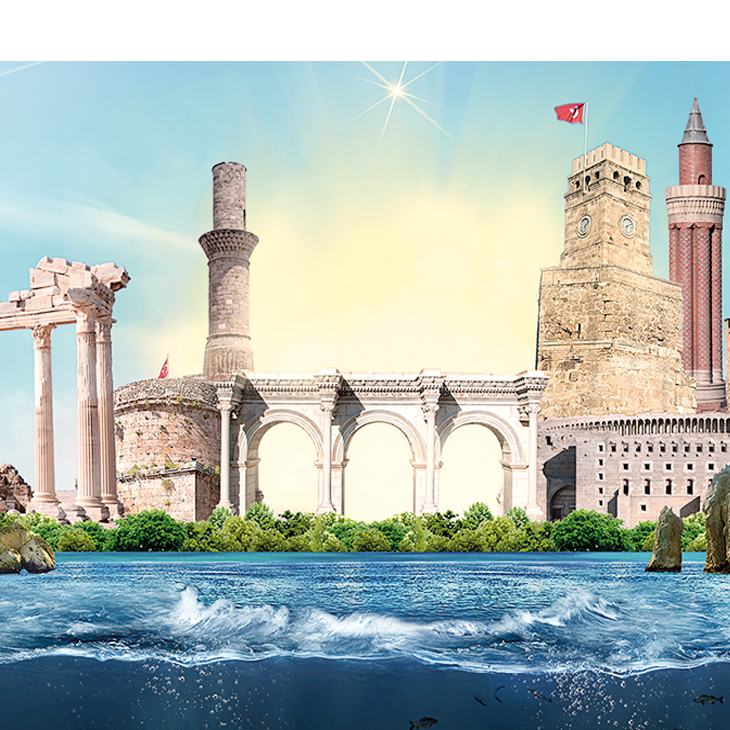
Remain from Antalya’s time as a major Roman port. These include Hadrian’s Gate, built to honor the Roman emperor’s visit in 130 A.D and 2nd-century Hidirlik Tower, with harbor views.
The clifftop fortress neighborhood of Kaleiçi is the site of Yivli Minare, a 38m-high brick
minaret, and narrow streets lined with centuries-old restored Ottoman homes.
Antalya.jpg
Antalya Museum houses a vast collection dating to early antiquity.
Popular Konyaalti Beach is a long, pebbly stretch, while sandy Lara Beach is known for themed hotels and nearby Düden Waterfalls.
Beyond the city lie ruins such as Aspendos’ preserved theater and Perge’s massive Greco-Roman stadium.
Popular outdoor activities include golfing, diving and hiking the 500km Lycian Way footpath.

Pamukkale, Turkey

ephesus-and-pamukkale-2-day-tour-from-bodrum-in-bodrum-340207

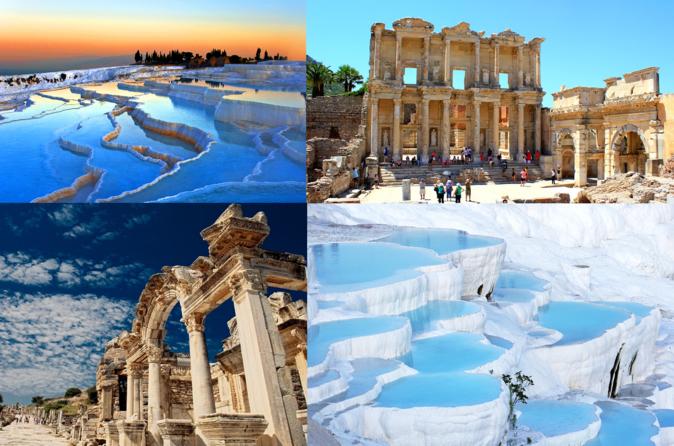
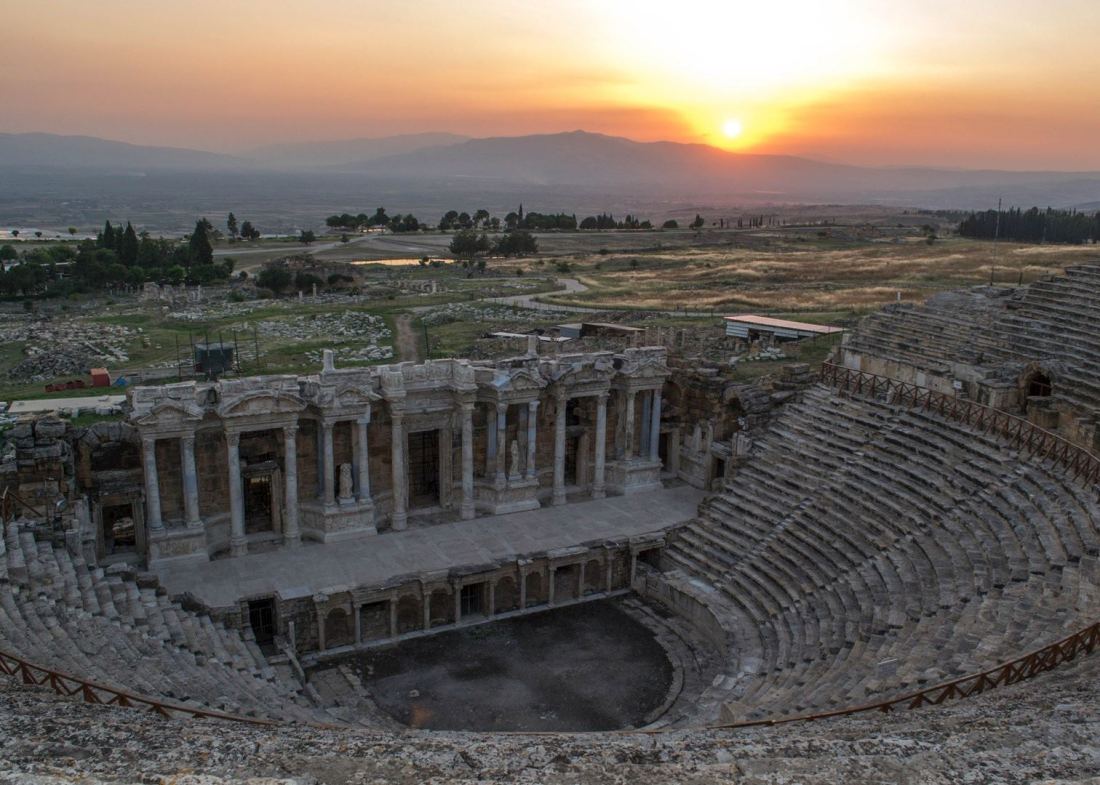
Pamukkale, meaning “cotton castle” in Turkish, is a natural site in Denizli in southwestern Turkey. The area is famous for a carbonate mineral left by the flowing water.  It is located in Turkey’s Inner Aegean region, in the River Menderes valley, which has a temperate climate for most of the year.The ancient Greco-Roman city of Hierapolis was built on top of the white “castle” which is in total about 2,700 metres (8,860 ft) long, 600 m (1,970 ft) wide and 160 m (525 ft) high. It can be seen from the hills on the opposite side of the valley in the town of Denizli, 20 km away.

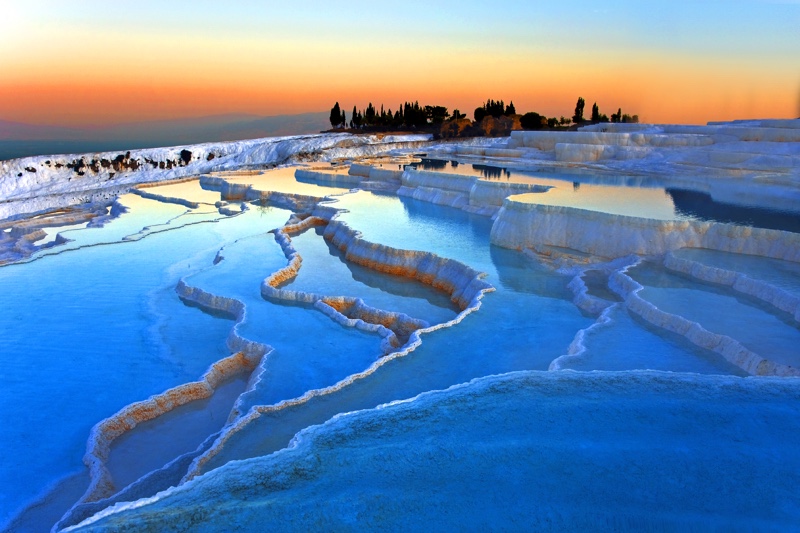
Known as Pamukkale (Cotton Castle) or ancient Hierapolis (Holy City), this area has been drawing the weary to its thermal springs since the time of Classical antiquity.  The Turkish name refers to the surface of the shimmering, snow-white limestone, shaped over millennia by calcium-rich springs.

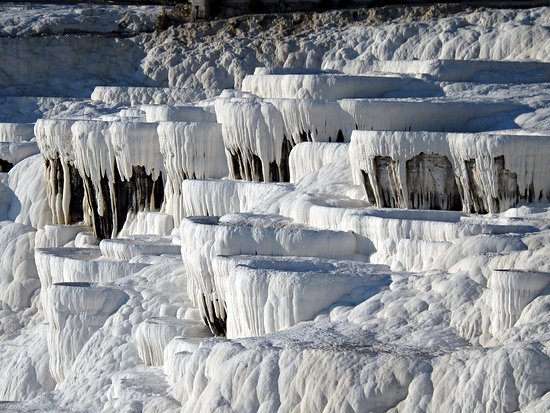
Dripping slowly down the vast mountainside, mineral-rich waters foam and collect in terraces, spilling over cascades of stalactites into milky pools below. Legend has it that the formations are solidified cotton (the area’s principal crop) that giants left out to dry.
031103093076155203006213016077230079039105182220.jpg

Tourism is and has been a major industry in the area for thousands of years, due to the attraction of the thermal pools. As recently as the mid-20th century, hotels were built over the ruins of Hierapolis, causing considerable damage.  An approach road was built from the valley over the terraces, and motor bikes were allowed to go up and down the slopes. When the area was declared a World Heritage Site, the hotels were demolished and the road removed and replaced with artificial pools.
Pamukkale-Traverten

Overshadowed by natural wonder, Pamukkale’s well-preserved Roman ruins and museum have been remarkably underestimated and unadvertised; tourist brochures over the past 20 years have mainly featured photos of people bathing in the calcium pools.

Aside from a small footpath running up the mountain face, the terraces are all currently off-limits, having suffered erosion and water pollution at the feet of tourists.
travertine-lake-cascades