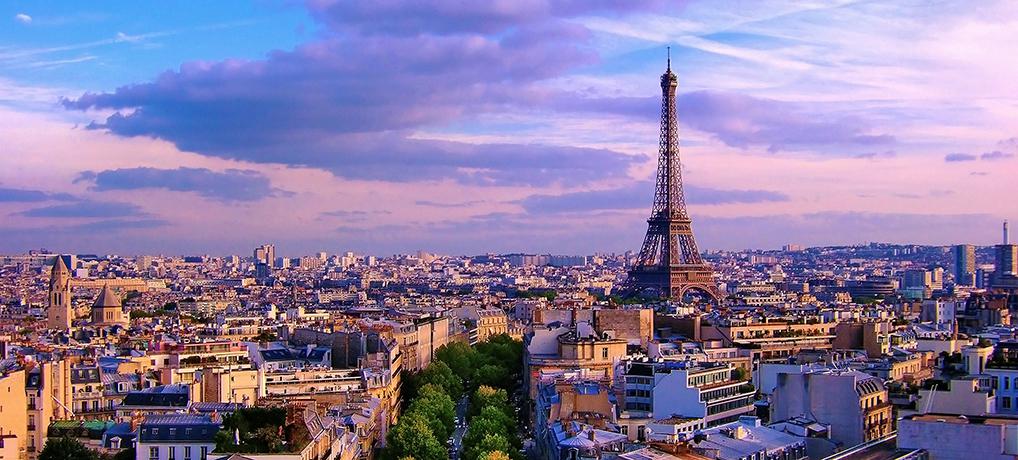
Pariz, France
Paris is the capital and most populous city of France, with an area of 105 square kilometres (41 square miles) and an official estimated population of 2,140,526 residents as of 1 January 2019.
Since the 17th century, Paris has been one of Europe’s major centres of finance, commerce, fashion, science, and the arts.
The City of Paris is the centre and seat of government of the Île-de-France, or Paris Region, which has an estimated official 2019 population of 12,213,64, or about 18 percent of the population of France. The larger Paris metropolitan area had a population of 12,532,901 in 2015. The Paris Region had a GDP of €681 billion (US$850 billion) in 2016, accounting for 31 percent of the GDP of France, and was the 5th largest region by GDP in the world.According to the Economist Intelligence Unit Worldwide Cost of Living Survey in 2018, Paris was the second-most expensive city in the world, behind Singapore and ahead of Zurich, Hong Kong, Oslo and Geneva.
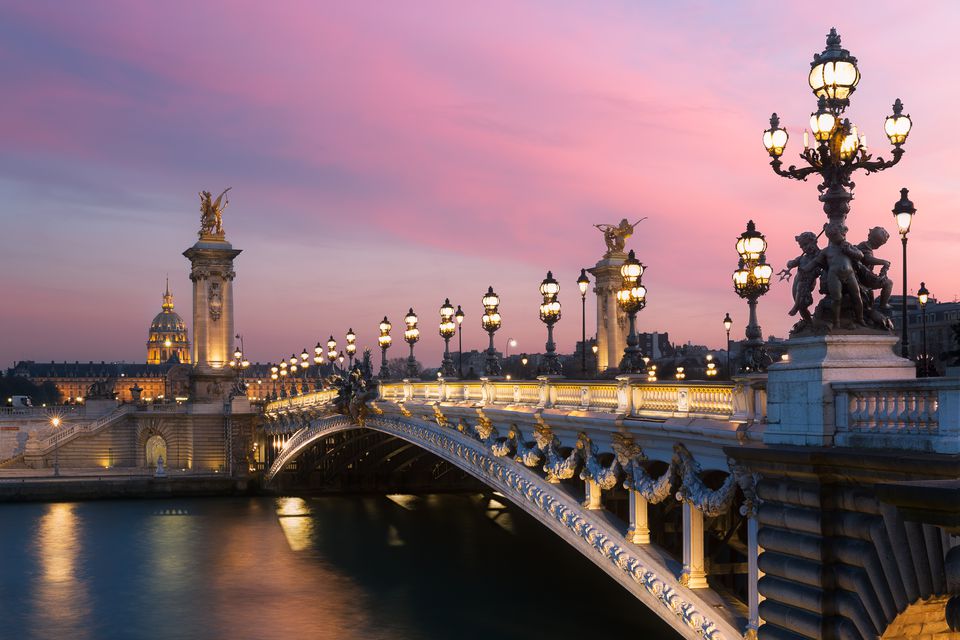
The city is a major rail, highway, and air-transport hub served by two international airports: Paris-Charles de Gaulle (the second busiest airport in Europe) and Paris-Orly. Opened in 1900, the city’s subway system, the Paris Métro, serves 5.23 million passengers daily, and is the second busiest metro system in Europe after Moscow Metro. Gare du Nord is the 24th busiest railway station in the world, with 262 million passengers in 2015.
Paris is especially known for its museums and architectural landmarks: the Louvre was the most visited art museum in the world in 2018, with 10.2 million visitors. The Musée d’Orsay and Musée de l’Orangerie are noted for their collections of French Impressionist art, and the Pompidou Centre Musée National d’Art Moderne has the largest collection of modern and contemporary art in Europe. The historical district along the Seine in the city centre is classified as a UNESCO Heritage Site. Popular landmarks in the centre of the city include the Cathedral of Notre Dame de Paris and the Gothic royal chapel of Sainte-Chapelle, both on the Île de la Cité; the Eiffel Tower, constructed for the Paris Universal Exposition of 1889; the Grand Palais and Petit Palais, built for the Paris Universal Exposition of 1900; the Arc de Triomphe on the Champs-Élysées, and the Basilica of Sacré-Coeur on the hill of Montmartre. Paris received 23 million visitors in 2017, measured by hotel stays, with the largest numbers of foreign visitors coming from the United States, the UK, Germany and China. It was ranked as the third most visited travel destination in the world in 2017, after Bangkok and London.
The football club Paris Saint-Germain and the rugby union club Stade Français are based in Paris. The 80,000-seat Stade de France, built for the 1998 FIFA World Cup, is located just north of Paris in the neighbouring commune of Saint-Denis. Paris hosts the annual French Open Grand Slam tennis tournament on the red clay of Roland Garros. Paris hosted the Olympic Games in 1900, 1924 and will host the 2024 Summer Olympics. The 1938 and 1998 FIFA World Cups, the 2007 Rugby World Cup, and the 1960, 1984, and 2016 UEFA European Championships were also held in the city and, every July, the Tour de France bicycle race finishes there.
Marseille, France
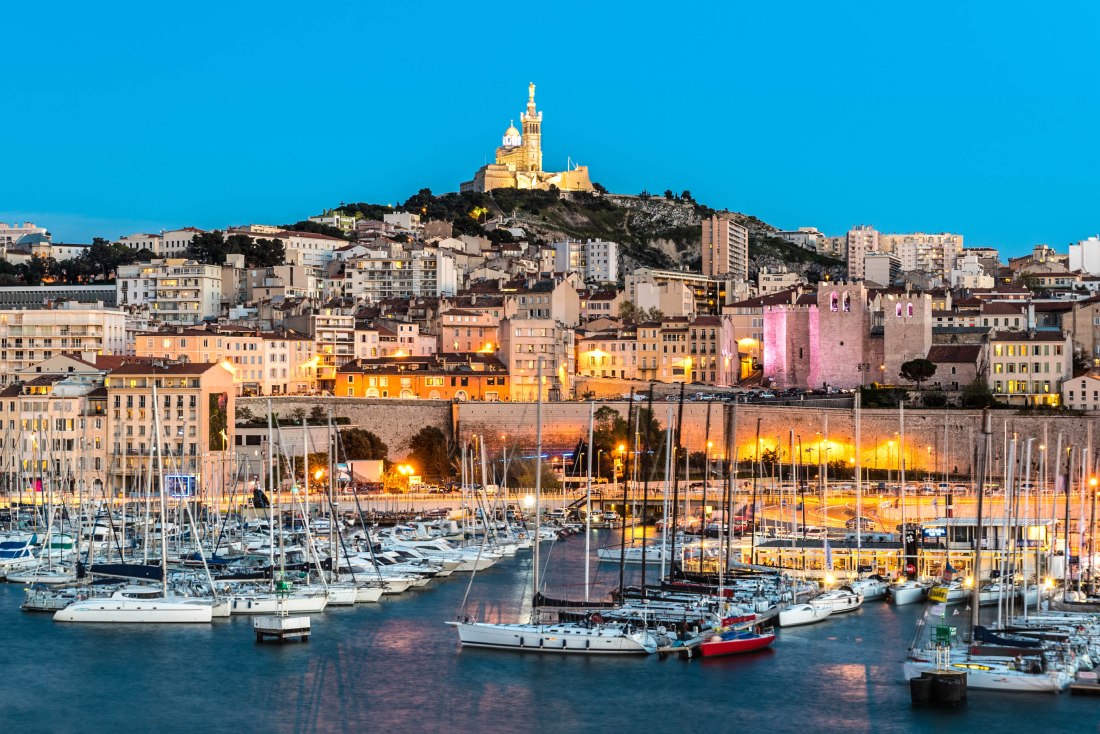
Marseille is the second-largest city of France. The main city of the historical province of Provence, it nowadays is the prefecture of the department of Bouches-du-Rhône and region of Provence-Alpes-Côte d’Azur. It is located on France’s south coast near the mouth of the Rhône river. The city covers an area of 241 km2 (93 sq mi) and had a population of 852,516 in 2012. Its metropolitan area, which extends over 3,173 km2 (1,225 sq mi) is the third-largest in France after Paris and Lyon, with a population of 1,831,500 as of 2010.
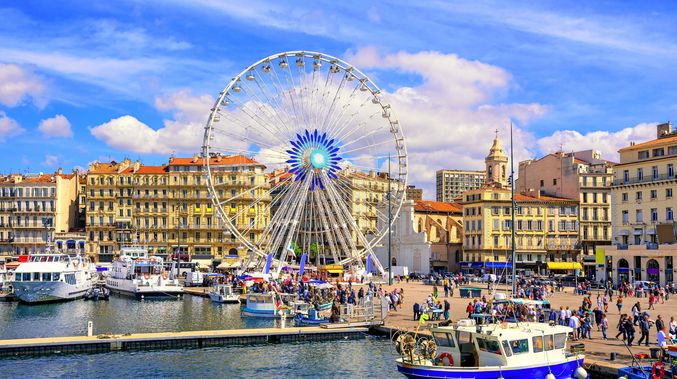
Known to the ancient Greeks and Romans as Massalia (Greek: Μασσαλία, Massalía), Marseille was an important European trading centre and remains the main commercial port of the French Republic. Marseille is now France’s largest city on the Mediterranean coast and the largest port for commerce, freight and cruise ships. The city was European Capital of Culture in 2013 and European Capital of Sport in 2017; it hosted matches at the 1998 World Cup and Euro 2016. It is home to Aix-Marseille University.
Strasbourg,France


 Dream Travel